


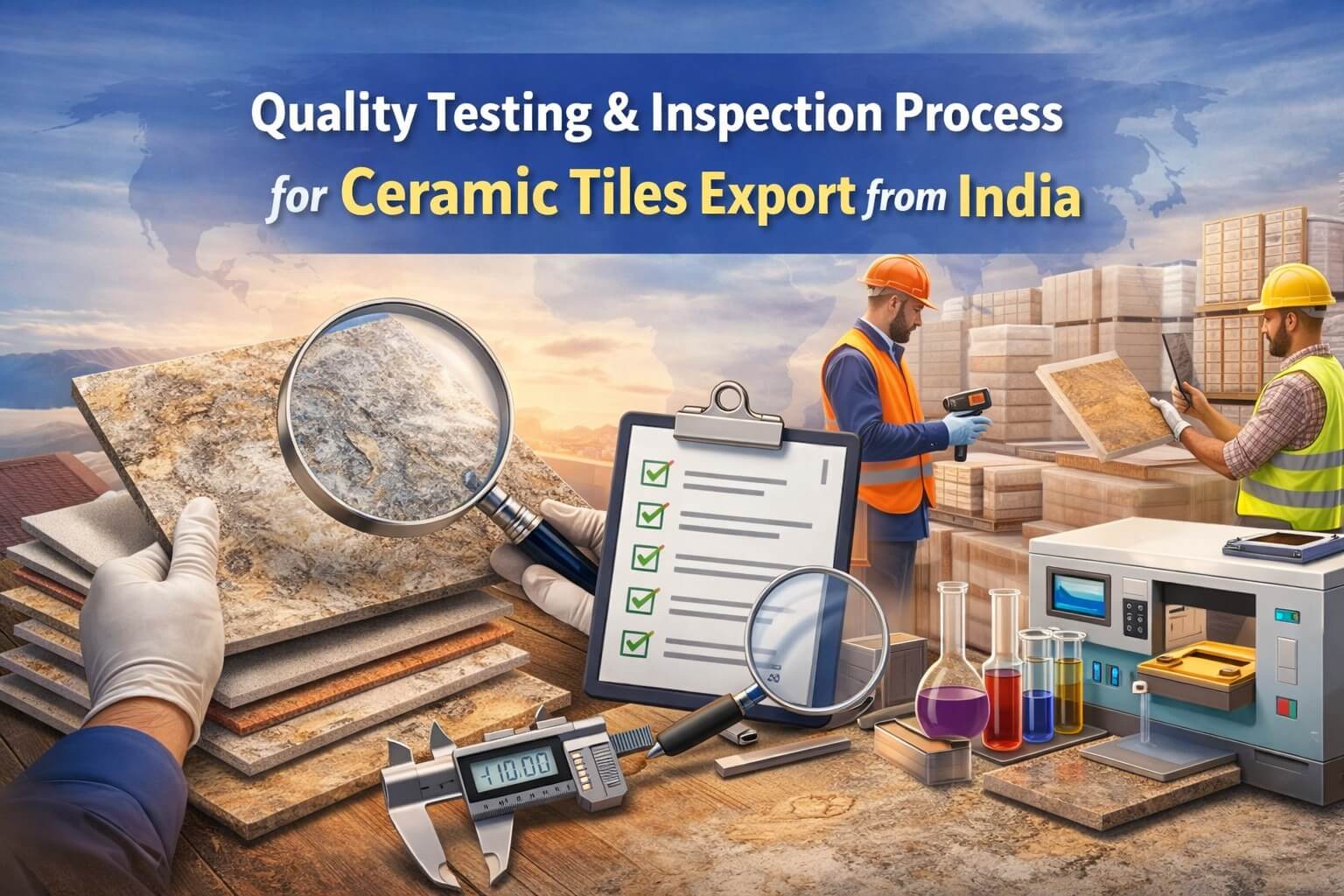
India has become one of the world’s most trusted sourcing destinations for ceramic tiles due to its advanced manufacturing ecosystem and strict quality assurance practices. For global buyers, understanding the quality testing & inspection process in ceramic tile exports from India is essential to ensure durability, safety, and compliance with international standards.
Every professional ceramic tile exporter in India follows a structured quality control framework that begins with raw material inspection and ends with pre-shipment verification. This guide explains each stage of testing that ensures export-grade ceramic tiles meet global expectations.
1. Importance of Quality Testing in Tiles Export from India
Quality testing is a critical pillar of ceramic tiles export from India, especially when catering to diverse international markets with different technical standards. Testing ensures:
- Consistent tile dimensions and thickness
- Resistance to wear, moisture, and temperature changes
- Compliance with ISO, EN, ASTM, and regional regulations
Reputed ceramic tile manufacturers and exporters in India rely on in-house labs and third-party audits to maintain global credibility.
2. Raw Material Inspection & Batch Approval
Quality control begins before tile production starts. Export-grade tiles require:
- High-purity clay and feldspar
- Controlled moisture content
- Uniform particle size
Each raw material batch undergoes chemical and physical analysis to ensure consistency. This early-stage inspection plays a vital role in the successful export of ceramic tiles from India.
3. In-Process Manufacturing Quality Checks

During production, tiles are continuously monitored at multiple stages:
- Pressing and shaping accuracy
- Digital printing alignment and shade uniformity
- Controlled kiln firing temperature
Automated sensors and manual inspections help a ceramic tile export company in India maintain uniform quality across large volumes.
4. Dimensional & Visual Inspection
Once tiles are fired and polished, they undergo strict dimensional checks:
- Length, width, and thickness tolerance
- Flatness and edge straightness
- Surface defects such as pinholes, cracks, or glaze issues
These inspections are crucial to ensure smooth installation for overseas projects and reinforce trust in the best ceramic tiles exporter in India.
5. Physical & Mechanical Strength Testing
To meet international durability requirements, ceramic tiles are tested for:
- Breaking strength
- Modulus of rupture
- Impact resistance
Such tests confirm that tiles can withstand heavy foot traffic and environmental stress, making them suitable for residential, commercial, and industrial environments.
6. Water Absorption & Chemical Resistance Tests
Water absorption testing determines tile suitability for specific applications:
- Low absorption for floor and outdoor tiles
- Controlled absorption for wall tiles
Chemical resistance tests ensure tiles remain unaffected by cleaning agents, acids, and alkalis—an essential requirement for many global markets relying on ceramic tiles export from India.
View the Quality Testing Process for Ceramic Tiles
7. Slip Resistance & Surface Safety Testing
For countries with strict safety norms, exporters conduct
- Slip resistance tests (wet and dry conditions)
- Surface friction analysis
This is especially important for public spaces such as malls, hospitals, and airports supplied through tile exports from India.
8. Shade, Caliber & Sorting Control
Tiles are sorted based on:
- Shade variation
- Caliber (exact size grouping)
- Finish consistency
Clear labeling and batch segregation prevent installation issues at destination sites. Reliable ceramic tiles exporter in India ensures accurate sorting to minimize post-installation complaints.
9. Pre-Shipment Inspection (PSI)

Before dispatch, a final inspection is conducted:
- Quantity verification
- Packaging integrity
- Pallet stability and container loading
Many importers appoint independent agencies for PSI to validate compliance before shipment. This step is critical for smooth customs clearance during the export of ceramic tiles from India.
10. Export Packaging Quality Checks
Export packaging undergoes its own inspection process:
- Carton strength and moisture resistance
- Proper pallet fumigation
- Shock and vibration resistance
Packaging quality directly impacts breakage rates and overall importer satisfaction.
11. Documentation & Compliance Verification
Export documentation is cross-checked to ensure:
- Accurate product descriptions
- Correct HS codes
- Matching quantities and batch numbers
Strong documentation control supports hassle-free global trade and reflects professionalism among ceramic tile manufacturers and exporters in India.
12. Long-Term Quality Assurance & Buyer Confidence
Leading exporters like Sunshine Export invest in continuous improvement through:
- Regular lab upgrades
- Staff training programs
- Feedback-driven process refinement
This commitment ensures repeat orders and long-term partnerships with global buyers.
Frequently Asked Questions (FAQs)
Q1. Why is quality testing crucial for ceramic tile exports from India?
It ensures compliance with international standards, reduces breakage, and builds buyer confidence.
Q2. Do Indian exporters follow international testing standards?
Yes. Most ceramic tile manufacturers and exporters in India follow ISO, EN, ASTM, and destination-specific norms.
Q3. Can buyers request a third-party inspection?
Absolutely. Many importers appoint independent agencies before shipment.
Q4. What tests are most important for exporting ceramic tiles from India?
Water absorption, breaking strength, dimensional accuracy, and surface inspection are critical.
Q5. How does testing reduce installation issues?
Proper sorting, shade matching, and size calibration ensure smooth on-site installation.
