
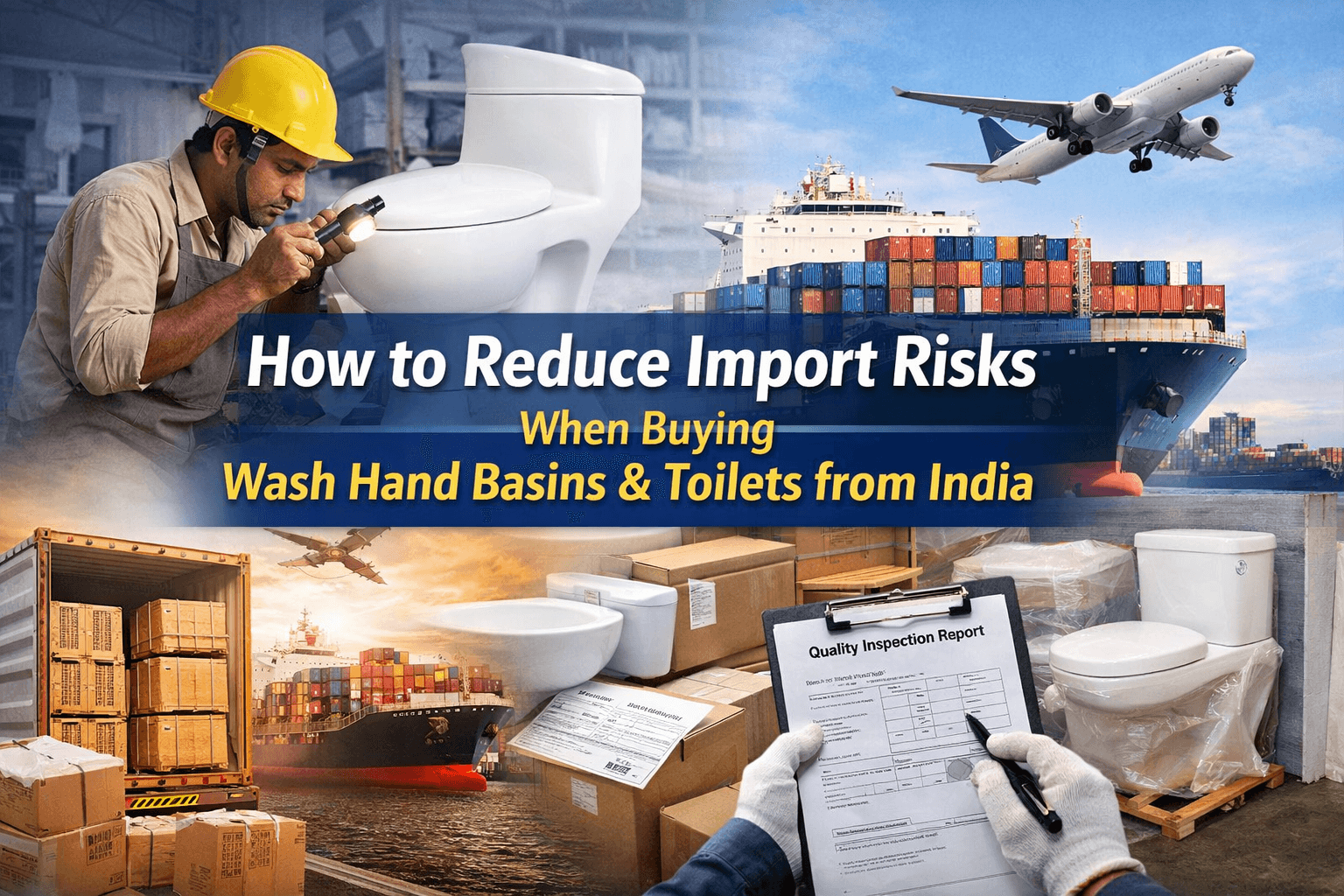
How to Reduce Import Risks When Buying Wash Hand Basins & Toilets from India

Importing sanitary ware from India is a smart commercial move for many global buyers. India offers cost efficiency, scalable production, and a wide range of design options. However, experienced importers know that price advantage alone does not eliminate risk. Quality inconsistency/topic breakage during transit, documentation errors, and unclear after-sales processes can quickly turn a profitable deal into a costly one. This human-touch, practical guide is written for intelligent buyers who want to reduce import risks when sourcing washhand basins and toilets from India while maintaining quality, timelines, and brand reputation.

1. Choose Exporters With Proven Sanitary Ware Experience

The first risk filter is exporter credibility. Look beyond attractive websites and brochures. Verify:

  • Years of export experience
  • Product specialization in wash hand basin toilet export from India
  • Countries served and repeat buyers
  • Factory audits or virtual walkthroughs

Exporters who regularly handle toilet and washbasin exports from India understand international compliance, packaging standards, and buyer expectations better than general traders.

2. Freeze Specifications Before Production Starts

Vague specifications are a major source of disputes. Your purchase order should clearly define:

  • Dimensions with tolerance limits
  • Glaze finish and color shade references
  • Trap type, water outlet position, and weight
  • Water absorption and strength standards

This level of clarity protects buyers importing washbasin toilet exports from India in bulk, especially for retail or project supply.

3. Sample Approval Is Non-Negotiable

Always request pre-production samples. For recurring SKUs, approve a golden reference sample that is sealed and documented. This becomes the benchmark for all future shipments. For time-sensitive orders, video inspections combined with couriered samples can reduce delays without increasing risk, particularly for wash basins for toilet export from India.

4. Implement Multi-Stage Quality Control

Quality control should not be limited to the final stage. Smart importers insist on:

  • Raw material inspection
  • In-process checks during casting and glazing
  • Pre-shipment inspection (PSI)

Third-party inspections add transparency and are especially useful when dealing with toilet and washhand basin exports from India for new suppliers.

5. Match Packaging Strategy to Order Type

Breakage is the most common import risk in sanitary ware. Packaging must be customized:

  • Bulk packaging: Foam wrapping, honeycomb boards, wooden pallets
  • Retail packaging: Drop-tested cartons, printed boxes, corner protection

Insist on container loading photos and packing videos for toilet and washhand basin exports from India to ensure compliance before dispatch.

6. Understand Production Capacity & Lead Times

Confirm monthly capacity, kiln availability, and peak-season constraints. Many delays occur due to unrealistic delivery promises. Align milestones with penalties or incentives to protect your supply chain when importing wash hand basin toilet exports from India.

7. Get Documentation Right the First Time

Customs delays often stem from document mismatches. Before shipment, review:

  • Commercial invoice
  • Packing list
  • HS codes
  • Certificate of origin
  • Inspection and fumigation reports

Accurate paperwork ensures smooth clearance for toilet hand basin export from India and prevents unexpected demurrage charges.

8. Use Balanced Payment Terms

Reduce financial exposure by structuring payments wisely:

  • 30% advance + 70% against BL copy
  • Letter of Credit for first-time orders
  • Escrow for large project shipments

Reliable exporters are flexible once trust is established. Reputed companies like Sunshineexport often support structured payment models to protect both buyer and seller.

9. Define After-Sales & Breakage Policies Clearly

Your contract should clearly state:

  • Acceptable breakage percentage
  • Claim documentation process
  • Credit note or replacement timelines

This is essential when dealing with high-volume toilet and washbasin exports from India, where even small breakage ratios can impact margins.

10. Think Long-Term Partnership, Not Just Price

The lowest-price supplier is rarely the lowest-risk option. Choose exporters who proactively suggest better packaging, alternative designs, or compliance improvements. Long-term partners help you grow sustainably in competitive markets. Many global buyers continue working with Sunshineexport for this exact reason: transparent communication and export-focused processes.

FAQs

Q1. What is the biggest risk in sanitary ware imports from India?
Breakage during transit and inconsistent quality are the most common risks, both manageable with proper packaging and inspections.

Q2. Are third-party inspections necessary for every shipment?
They are highly recommended for first orders and new designs. For repeat SKUs, periodic inspections are sufficient.

Q3. Can Indian exporters customize washbasins and toilets?
Yes. Most exporters support OEM designs, custom sizes, and private labeling.

Q4. How do I avoid customs clearance delays?
Ensure accurate HS codes, consistent invoice values, and pre-approved documents before shipment.

Q5. Is bulk or retail packaging safer for imports?
Both are safe if designed correctly. Retail packaging requires stronger cartons, while bulk needs palletized protection.
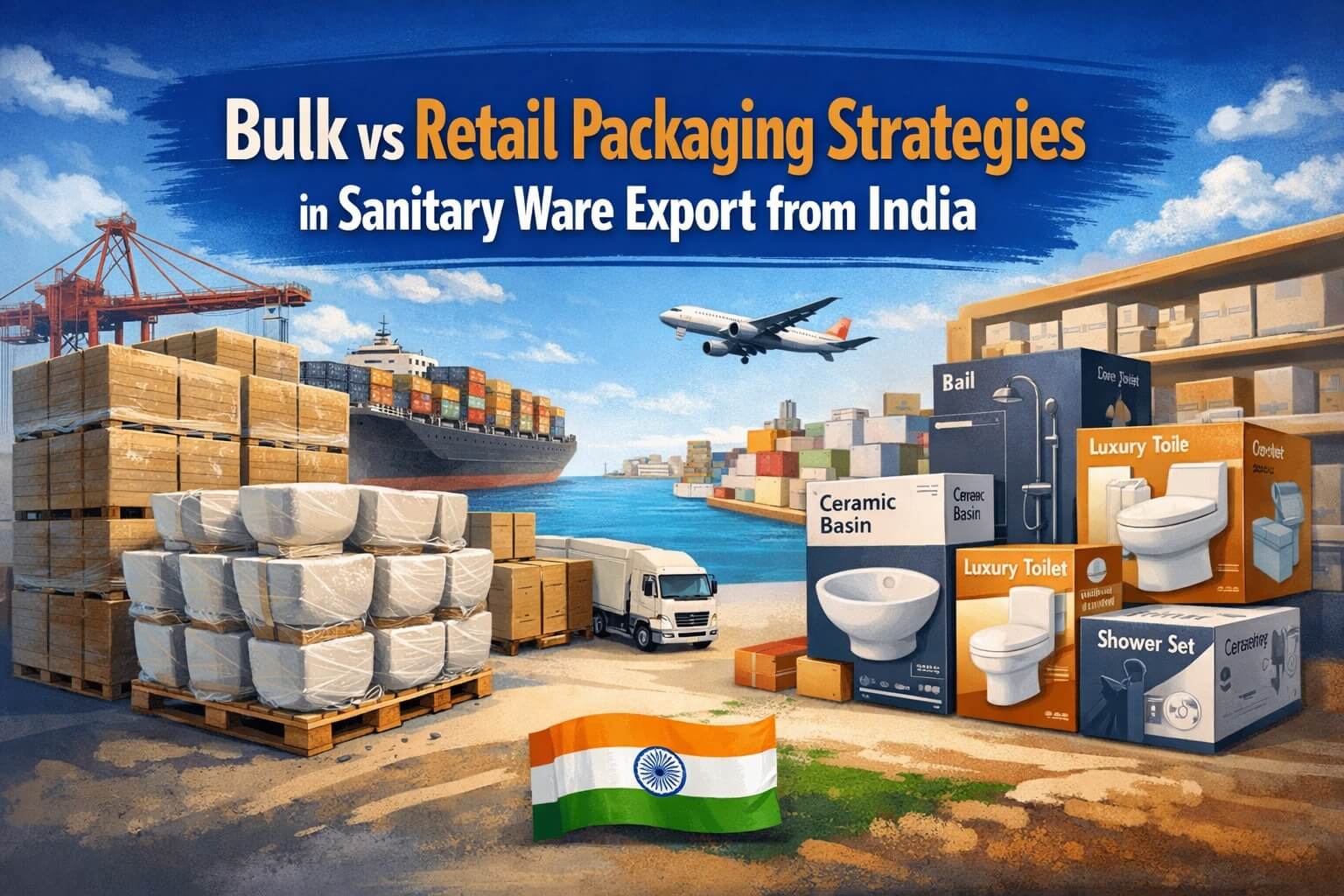
Bulk vs Retail Packaging Strategies in Sanitary Ware Export from India

Packaging plays a far bigger role in global trade than many importers initially realize, especially when dealing with fragile, high-value products like ceramic sanitary ware. In the competitive landscape of Sanitary Ware Export from India, choosing between bulk and retail packaging can significantly affect shipping safety, logistics costs, branding, and overall buyer satisfaction.

For international buyers involved in washhand basin toilet export from India, understanding the right packaging strategy is essential to minimize damage, optimize freight, and align with target markets. This guide explains the key differences, benefits, and decision factors behind bulk vs retail packaging in the sanitary ware export business.

Why Packaging Strategy Matters in Sanitary Ware Export

Ceramic products such as wash basins and toilets are heavy, fragile, and susceptible to damage during long-distance transportation. Improper packaging can lead to:

  • High breakage rates
  • Increased insurance claims
  • Delays in delivery
  • Loss of buyer trust

For exporters handling Ceramic Sanitary Ware Export from India, packaging is not just about protection—it is a strategic business decision that impacts profitability and brand reputation.

Understanding Sanitary Ware Export from India

India has emerged as a trusted global supplier of sanitary ware due to its advanced ceramic manufacturing capabilities, skilled workforce, and competitive pricing. Products commonly exported include:

  • Wash hand basins
  • Toilet bowls and WC units
  • Combined toilet and washbasin sets

With growing international demand for toilets and wash basins exported from India, exporters must meet varying expectations of wholesalers, retailers, contractors, and project developers across different regions.

What Is Bulk Packaging in Sanitary Ware Export?

Definition and Purpose of Bulk Packaging

Bulk packaging is designed for large-volume shipments, typically destined for wholesalers, distributors, or project-based buyers. It focuses on durability, space efficiency, and cost reduction rather than visual appeal. This approach is widely used for the washbasin for toilet export from India, where products are unpacked at warehouses before local distribution.

Materials Used in Bulk Packaging

  • Heavy-duty corrugated cartons
  • Molded pulp or foam separators
  • Wooden pallets or crates (for long sea transit)
  • Shrink wrapping and strapping

Benefits of Bulk Packaging

  • Lower packaging cost per unit
  • Better container utilization
  • Reduced overall shipment weight
  • Ideal for OEM and wholesale buyers

Bulk packaging is especially effective for toilet and hand basin export from India, where minimizing logistics costs is a priority.

What Is Retail Packaging in Sanitary Ware Export?

Definition and Purpose of Retail Packaging

Retail packaging is designed for direct display or resale. It combines strong protective elements with branding, product information, and visual presentation. Retail-ready packaging is commonly used in toilet and washhand basin exports from India aimed at showrooms and e-commerce platforms.

Retail Packaging Components

  • Printed branded cartons
  • Product images and specifications
  • Barcodes, SKU labels, and handling icons
  • Inner foam or protective inserts

Benefits of Retail Packaging

  • Strong brand visibility
  • Professional appearance for end customers
  • Easier handling at retail points
  • Better customer confidence

Retail packaging works well for toilet hand basin exports from India, where brand identity and presentation matter.

Bulk vs Retail Packaging: Key Differences

Cost Efficiency

Bulk packaging is more economical and suitable for large orders, while retail packaging involves higher material and printing costs but adds branding value.

Protection Level

Bulk packaging prioritizes industrial-grade protection for shipping. Retail packaging balances protection with aesthetics.

Buyer Type

  • Bulk packaging: Distributors, importers, contractors
  • Retail packaging: Retail chains, online sellers, and showrooms

Understanding your target buyer is crucial when exporting washhand basin toilet exports from India.

Contact Us Today

Get the Bulk vs Retail Packaging Checklist

How Packaging Impacts Logistics and Compliance

Freight Optimization

Well-designed bulk packaging allows better stacking, reducing unused space and lowering freight costs. This is critical in large-volume washbasin toilet exports from India.

Export Compliance

Proper packaging ensures compliance with:

  • Destination country labeling regulations
  • Fragile handling requirements
  • Moisture resistance for sea freight

Non-compliant packaging can lead to customs delays or shipment rejection.

Choosing the Right Packaging Strategy

Importers should evaluate:

  • Order quantity
  • Sales channel (retail vs wholesale)
  • Destination market expectations
  • Storage and handling infrastructure

Some exporters offer hybrid solutions with bulk packaging for transport and inner retail-ready cartons, providing flexibility for diverse markets. This adaptability is a key strength of Sunshineexport.

Key Selling Points of Indian Sanitary Ware Packaging

  • High protection standards for ceramic products
  • Cost-effective packaging solutions
  • Export-ready quality control
  • Flexible customization options
  • Expertise in Ceramic Sanitary Ware Export from India

Common Challenges and Solutions

Breakage During Transit
Solved with reinforced cartons, foam inserts, and drop-tested packaging.

High Freight Costs
Reduced through optimized carton sizing and palletization.

Branding Limitations
Addressed with customized retail packaging options.

Conclusion: Selecting the Right Packaging Strategy

Choosing between bulk and retail packaging is not a one-size-fits-all decision. The right approach depends on your market, order volume, and long-term business goals. For buyers involved in toilet and washbasin export from India, aligning packaging strategy with logistics efficiency and customer expectations ensures reduced risk, improved profitability, and sustainable growth.

What is the difference between bulk and retail packaging in sanitary ware export?
Bulk packaging focuses on cost efficiency and shipment safety for large-volume orders, while retail packaging combines protection with branding and presentation for direct resale.

FAQs – Bulk vs Retail Packaging in Sanitary Ware Export

What is the best packaging for exporting wash hand basins and toilets from India?
Bulk packaging is ideal for wholesalers and project buyers, whereas retail packaging is better suited for showrooms, retailers, and e-commerce sales.

Can bulk and retail packaging be combined in one shipment?
Yes, many exporters offer hybrid packaging solutions that combine bulk outer packaging with retail-ready inner cartons.

How is breakage prevented during ceramic sanitary ware export?
Breakage is minimized through reinforced cartons, foam or molded pulp inserts, proper palletization, and export-grade handling standards.

Is retail packaging suitable for toilet and wash basin export from India to e-commerce markets?
Yes, retail packaging is ideal for e-commerce, as it provides branding, product information, and enhanced protection for last-mile delivery.